September 16, 2025


Water scarcity is already affecting communities, economies, and ecosystems worldwide. In July 2024, Reuters reported that India is facing a water crisis that threatens its fast-growing economy, with shrinking rivers, drying lakes and falling groundwater levels. The article highlighted that approximately 200,000 people die each year due to contaminated water.
To address the crisis, the Indian government has set ambitious targets: recycling 70% of wastewater by 2030 (up from the current 20%) and reducing dependence on freshwater sources like rivers and groundwater to below 50% (from about 66% today). These efforts aim to secure water resources and prevent shortages from undermining health, livelihoods and industrial growth.
Understanding Water Management
Water management refers to the planning, development, distribution and sustainable use of water resources. It involves technical, social and ecological practices that ensure water is available in adequate quantity and quality for people, agriculture, industries and the environment.
Effective water management ensures:
Good water management integrates traditional knowledge, modern practices, and community participation to not only build resilience against scarcity, droughts and climate change but also popularize sustainable water usage for present and future generations.
India’s Water Crisis:
India faces a severe water crisis affecting millions of people. Many still lack access to safe and clean drinking water. Even when water is available, contamination from industrial waste, chemicals, or biological pollutants makes it unsafe for . Inadequate or antiquated infrastructure leads to leakages, inability to handle water demand especially during peak summer months while climate change exacerbates droughts and floods, further straining resources.
Key challenges for communities include:
Causes of Water Scarcity in India:
Recent Example of Water Mismanagement: Punjab Floods 2025
In August 2025, Punjab experienced catastrophic flooding along the Ravi River, with a record water flow of 14.11 lakh cusecs. Of this, 85% came from unregulated tributaries, nullahs and khuds, while only 15% was released from the Ranjit Sagar Dam (RSD). The river’s safe capacity of 9.7 lakh cusecs was exceeded by 4.41 lakh cusecs, marking the worst flood in Ravi’s history. Key districts affected included Amritsar, Gurdaspur, and Pathankot. (Source: Times of India)
The National Institute of Disaster Management (NIDM) notes that water mismanagement, rather than rainfall scarcity, often drives floods and urban water crises in India. Poor planning, inadequate infrastructure, uncoordinated water management, urbanization, deforestation and climate change worsen the problem. NIDM emphasizes that effective water management, stakeholder training, community involvement and integrated approaches like infrastructure upkeep, sustainable use, and accurate forecasting are key to reducing disaster risks and building resilient water systems.
Possible Solutions & Steps Towards Water Security
Conclusion:
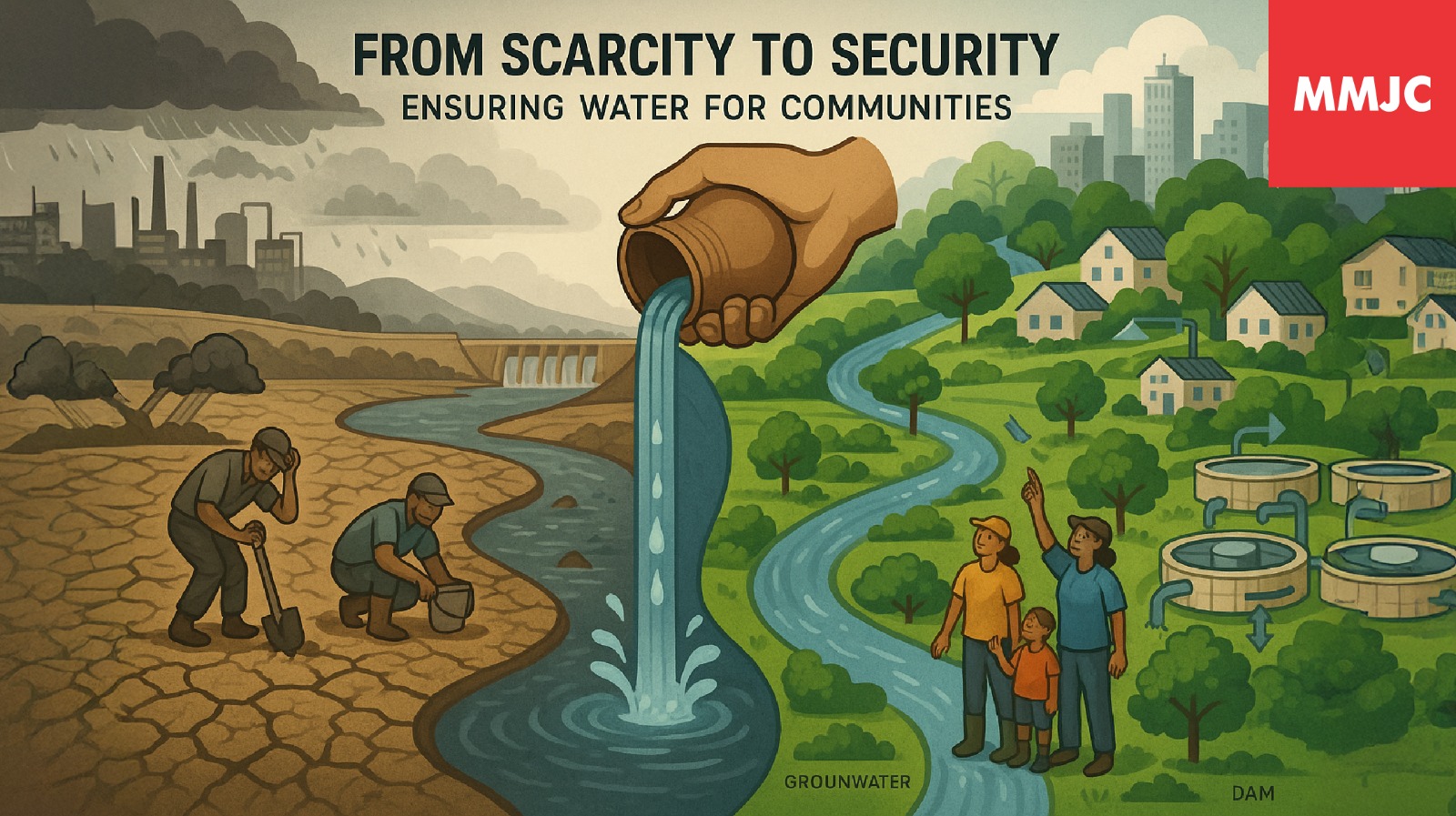
Water is no longer just a natural resource, it is a governance issue, a corporate risk, and a sustainability opportunity. From ensuring reliable access to building trust and resilience, communities have much to gain by adopting responsible water practices. To truly move from scarcity to security, it is essential to go beyond basic management. By conserving water, recycling and replenishing resources, protecting ecosystems and collaborating with local institutions, communities can safeguard not only their immediate needs but also the long-term well-being of future generations.
Article Author:
Suhani Thepadiya,
Consultant – Sustainability, MMJC